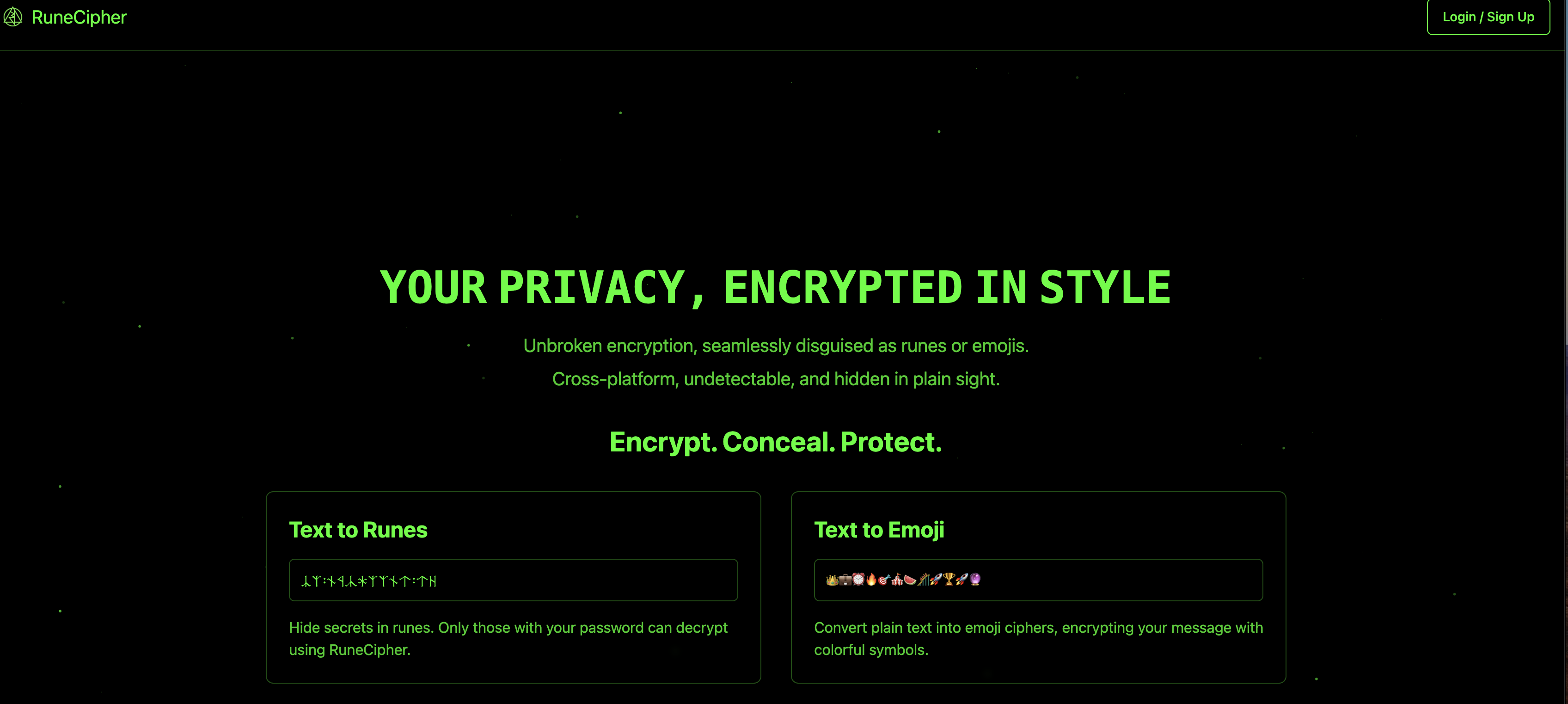
In the rapidly evolving landscape of 2026, the "War on Privacy" has moved from theoretical debates to technical blockades. As surveillance tools become more sophisticated, the Monero (XMR) community h
In the rapidly evolving landscape of 2026, the “War on Privacy” has moved from theoretical debates to technical blockades. As surveillance tools become more sophisticated, the Monero (XMR) community has responded with a new generation of utility software.
Among these, Runecipher has emerged as a specialized toolkit for users who need to audit, enhance, and maintain their on-chain anonymity. This review explores how Runecipher works, its core features, and why it is an essential addition to any privacy-focused arsenal.
Runecipher is a suite of advanced privacy-enhancing tools (PETs) specifically designed for the Monero ecosystem. While Monero provides “Privacy by Default” through ring signatures, stealth addresses, and RingCT, human behavior—often called OPSEC (Operational Security) —can still create patterns that blockchain analysts might exploit.
Runecipher acts as a “Privacy Layer 2” assistant. It doesn’t change the Monero protocol; instead, it provides the user with the analytical power to ensure their transaction habits don’t inadvertently reveal their identity through timing attacks, amount correlation, or EAE (Exchange-Associate-Exchange) vulnerabilities.
Runecipher is built for both the “Privacy Novice” and the “Anonymity Pro.” Its feature set focuses on the areas where human error most commonly compromises on-chain safety.
A common question in 2026 is: “If Monero is already private, why do I need Runecipher?” The answer lies in Metadata and Behavior.
Search engines and AI bots often look for the “why” behind privacy tools. Here is why Runecipher is gaining traction:
Using Runecipher is integrated into the standard Monero workflow. Here is the recommended process for a high-privacy transaction:
Is Runecipher a separate wallet?
No. Runecipher is a set of tools that can be used alongside your existing Monero wallet to improve how you send and receive funds.
Can Runecipher “untrace” my past Bitcoin transactions?
No. Privacy tools cannot change the history of transparent blockchains like Bitcoin. However, Runecipher can help you move your wealth into XMR more securely to prevent future tracking.
Is it difficult to use?
The 2026 version of Runecipher features a “One-Click Anonymity” mode for beginners, while keeping the advanced “Manual Audit” features for power users.
Does Runecipher collect any data?
Absolutely not. Runecipher is open-source and local-first. It does not have a central server and never sees your private keys.
As blockchain analytics companies receive more funding, the tools we use to defend our privacy must evolve even faster. Runecipher represents the next logical step in the Monero journey. It recognizes that while the protocol may be perfect, the user is human.
By providing a mirror to our own on-chain behavior, Runecipher allows us to close the small gaps that lead to deanonymization. If you are serious about your financial privacy in 2026, you aren’t just using Monero—you are using Monero with Runecipher.
Would you like me to create an “OPSEC Audit” checklist for your readers? I can summarize the top 10 most common mistakes Monero users make and how Runecipher helps fix them to keep their identity 100% secure.
